
7 Alternatives to Weighted Blankets for Sensory Support
Last Updated: October 25, 2026
Quick Summary
Alternatives to weighted blankets for sensory support include compression sheets, weighted lap pads, weighted vests or sweatshirts, textured blankets, Lycra bedding, layered blankets, and handcrafted tactile games. Each delivers pressure or tactile input differently, so the right choice depends on the user's age, mobility, and sensory preferences. Run a two-week trial with items you already own before buying.
Compression sheets provide full-body pressure through fabric stretch rather than weight, with no heavy load on the sleeper.
Weighted lap pads deliver localized deep pressure during seated activities and are easier to supervise than full blankets.
Layered blankets offer an adjustable, low-cost trial, though heavier layers still need supervision with young children.
Any tool covering the body should let the user turn, sit up, and exit independently before unsupervised use.
Avoid weighted items for infants and toddlers unless a clinician has specifically cleared them.
Table of Contents
Why Families Look Beyond Weighted Blankets for Sensory Support
How Deep Pressure Works and Where Alternatives Fit In
Side-by-Side Comparison of Sensory Support Alternatives
Compression Sheets for Sensory Needs: A Full-Body Option
Weighted Lap Pad for Kids: Portable Pressure Without a Full Blanket
Sensory Tools for Calming: Textured, Wearable, and Tactile Options
Sensory-Friendly Sleep Tools for Bedtime and Rest
Safety Guidance and When to Ask a Professional
Frequently Asked Questions
Why Families Look Beyond Weighted Blankets for Sensory Support
Weighted blankets are one of the most popular sensory support tools on the market, yet many families find they simply don't work for their child, their sleeper, or their daily routine. Some children run hot under a heavy blanket. Toddlers and young sleepers raise safety questions about weight and supervision.
Many parents and occupational therapists have tried a weighted blanket, watched it end up folded in a closet, and want a different path. The good news is that sensory support is not a single product category. It is a set of tools matched to a person's sensory preferences, age, and setting.
Below, we break down seven alternatives, compare them side by side, and explain who each one actually suits. If you want calming activity ideas beyond any single tool, our guide to calming activities for sensory processing disorder is a good next read.
How Deep Pressure Works and Where Alternatives Fit In
Deep pressure stimulation is the use of firm, even pressure against the body to support sensory regulation. It is thought to activate the nervous system in a way that many people find calming and organizing, though individual responses vary widely.
A weighted blanket delivers this pressure through evenly distributed weight. Alternatives deliver the same idea through different mechanisms: stretch, compression, weight in a smaller area, or tactile input. That distinction matters because a child who dislikes full-body weight may still respond well to a compression sheet or a weighted lap pad.
Occupational therapists often test several tools before settling on one. To see how these tools fit into a clinical setting, read our guide to sensory tools for occupational therapy practice.
Side-by-Side Comparison of Sensory Support Alternatives
Most roundups list alternatives but stop at a one-line description. The comparison below goes further: it lines up each option by how pressure is delivered, who it fits, where it can be used, how adjustable it is, what care it needs, and roughly what it costs. Use it as a shortlist, then confirm fit with the individual user or an occupational therapist.
Option | Input mechanism | Best for | Use setting | Adjustable? | Care | Typical price band | Supervision notes |
Compression sheet | Fabric stretch across the mattress | Sleepers who kick off blankets or dislike loose bedding | Bed only | No, fixed by fabric | Machine washable; check for pilling and stretch loss | Roughly $30-$80 | Ensure the user can turn and exit the bed independently |
Weighted lap pad | Localized weight over the lap | Seated focus, car rides, classroom work | Portable | Some models have removable inserts | Spot clean or machine wash per label; check seams | Roughly $25-$70 | Keep weight off the chest and face; supervise young children |
Weighted vest or sweatshirt | Wearable weight across shoulders and torso | Movement-friendly regulation, transitions | Portable | Often adjustable via removable weights | Hand or gentle machine wash; remove weights first | Roughly $40-$120 | Limit wear time; remove for sleep and vigorous play |
Textured blanket | Tactile input from fabric, seams, or nubs | Touch-seeking users who like varied fabrics | Bed or couch | No | Machine washable; watch for seam wear | Roughly $20-$60 | No weight concerns; check for loose threads |
Lycra bedding | Gentle compression from stretchy fabric | Bedtime sensory input for users who tolerate snugness | Bed only | Limited | Machine washable; stretch can relax over time | Roughly $40-$100 | Same mobility check as compression sheets |
Layered blankets | Light, adjustable weight from existing bedding | Low-budget trial, temperature flexibility | Bed or couch | Yes, add or remove layers | Standard laundry | Low, often $0 if already owned | Heavier layers still need supervision with young children |
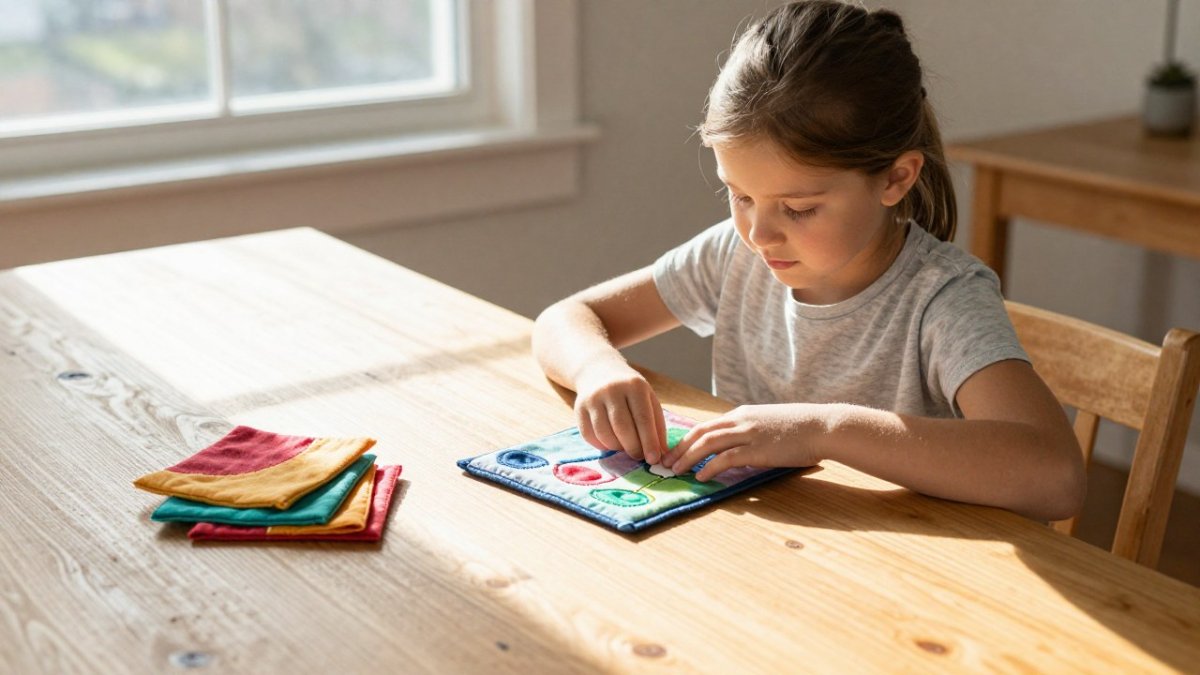
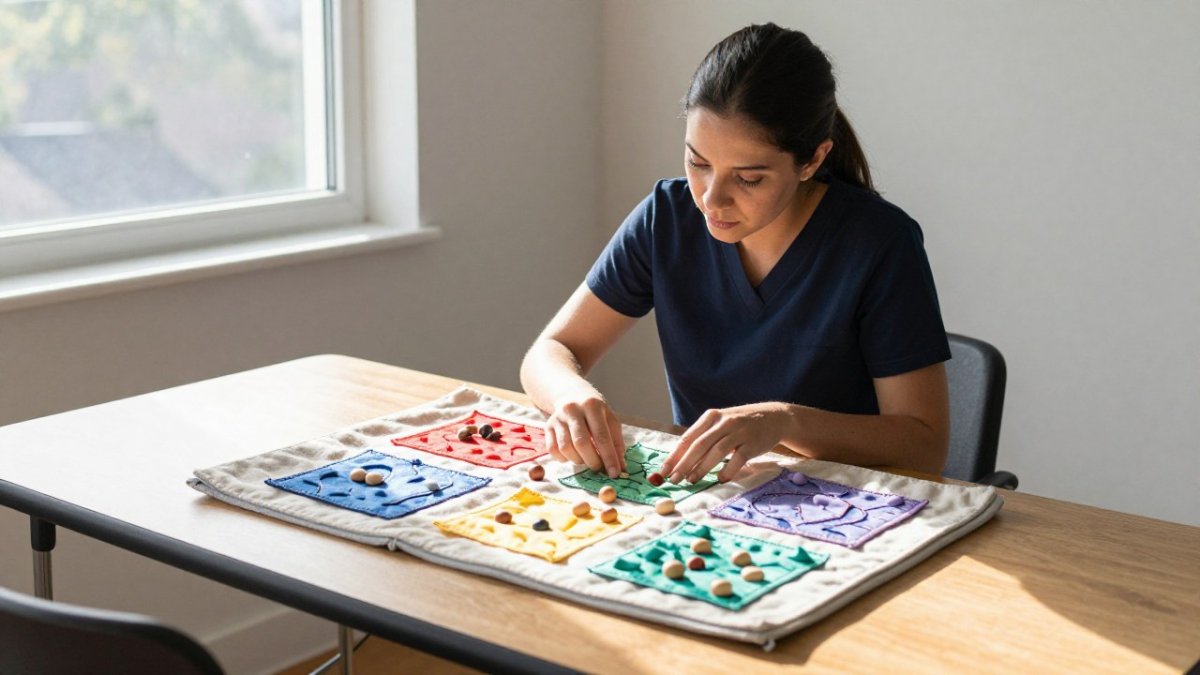
Handcrafted tactile games | Active tactile and finger input | Calming fidget, focus, and social play | Portable | N/A | Wipe clean or hand wash per maker | See website for current pricing | Age guidance per maker; small parts check for under-threes |
Two patterns stand out. First, the cheapest options are not always the least effective, layered blankets and tactile games can be trialed immediately. Second, the most adjustable options (lap pads with removable inserts, weighted vests) tend to be the easiest to fine-tune, while bed-based tools like compression sheets and Lycra bedding are fixed once installed.
Pro Tip Before buying anything, run a two-week trial with what you already own: a folded duvet as a lap pad, a snug fitted sheet, or a textured throw. Note which input the user seeks out and which they push away. That pattern is more useful than any product review.
For readers who want to browse physical options directly, explore our designs.
Compression Sheets for Sensory Needs: A Full-Body Option
Compression sheets for sensory needs are fitted sheets made from stretchy fabric that hug the mattress and provide gentle, even pressure across the body. Unlike a weighted blanket, the pressure comes from stretch rather than mass, so there is no heavy load resting on the sleeper.

This makes compression sheets a common pick for children who kick off blankets or who find weight uncomfortable. The trade-off is that the pressure is fixed by the fabric, not adjustable, and the sheet stays on the bed rather than traveling with you.
Best for: Sleepers who want full-body input without weight. Skip if: Your child dislikes snug or fitted clothing.
Weighted Lap Pad for Kids: Portable Pressure Without a Full Blanket
A weighted lap pad for kids is a small, weighted cushion that rests across the lap during seated activities. It delivers localized deep pressure without covering the whole body, which makes it far easier to use at a desk, in the car, or during classroom work.
Lap pads are also easier to supervise than a full blanket, since the weight is contained and visible. Many therapists use them as a first trial before recommending a larger tool. The limitation is coverage: a lap pad calms the lap and legs, not the torso.
Best for: Focus during homework, meals, and travel. Skip if: Your child needs full-body pressure to settle.
Sensory Tools for Calming: Textured, Wearable, and Tactile Options
Sensory tools for calming work through touch and movement rather than weight. This category includes textured blankets, weighted clothing such as vests and sweatshirts, and tactile games that keep hands busy.
Textured blankets are a strong fit for children who seek out different fabrics and seams. Weighted vests and sweatshirts distribute weight across the shoulders and torso while leaving the arms free, which suits kids who need to move. Tactile games add a hands-on option for focus and conversation.
For a deeper look at tactile options, our article on sensory toys for children with tactile sensitivities covers what to look for.
Best for: Touch-seeking children and movement-friendly regulation. Skip if: Your child is sensitive to seams, tags, or fabric textures.
Sensory-Friendly Sleep Tools for Bedtime and Rest
Sensory-friendly sleep tools focus on the bedtime routine rather than a single product. Layering lightweight blankets lets you adjust weight gradually, and wool blankets offer a different feel from synthetic fabrics. Both let a sleeper add or remove layers as comfort changes.
The advantage here is flexibility and low cost, since many families already own suitable blankets. The caution is that layered blankets can shift during the night, and heavier layers still require supervision with young children. If you are ready to buy, explore our designs.
Best for: Families who want an adjustable, low-commitment start. Skip if: You need consistent, predictable pressure every night.
Safety Guidance and When to Ask a Professional
Safety guidance is where most product-focused pages go quiet, and it is the part families most need.
Age and supervision. Weighted products carry age and weight guidance from the manufacturer, and those limits exist for a reason.
Mobility and escape. Any tool that covers the body should let the user turn over, sit up, and get out without help.
Heat and breathing. Weighted and compression products trap heat. Check for overheating, sweating, and flushed skin, especially in warm rooms or during illness.
Skin and sensory tolerance. Watch for redness, chafing, or distress at seams and edges. A tool that calms one child can overwhelm another; distress is a signal to remove it, not to persist.
Watch Out The most common mistake is buying a tool for a younger child because it worked for an older sibling. Match the tool to the individual's age, weight, mobility, and sensory profile, not to a review or a family hand-me-down.
When to seek professional advice. Consider a referral to an occupational therapist if: the user's sensory needs interfere with sleep, school, or daily routines; a tool causes distress or injury; you are unsure whether a product is safe for the user's age or condition; or you have tried several tools without improvement. A therapist can observe the user directly and match tools to sensory preferences rather than guesswork.
Evidence and expectations. Deep pressure is widely reported by users and practitioners to be calming, but individual responses vary and clinical evidence is mixed.
Frequently Asked Questions
Are weighted blankets good for kids with autism?
Many parents report that deep pressure helps children with autism calm down and settle at bedtime, and occupational therapists often recommend them as one tool among many. Results vary by child, and a weighted blanket is not a fit for every sensory profile. Some children dislike the weight or feel trapped by it, which is why alternatives like compression sheets, lap pads, and textured tactile toys are worth trying first. Talk to an occupational therapist before introducing a weighted blanket to a young child.
What sensory tools can provide calming pressure without a weighted blanket?
Compression sheets and Lycra bedding provide full-body pressure through stretch rather than weight. Weighted lap pads deliver targeted pressure to the lap or shoulders and are easier to move between home, school, and the car. Weighted vests and sweatshirts offer wearable pressure that travels with the wearer. Layering a few heavier blankets, using a beanbag chair, or wrapping up in a body sock are lower-cost options. Each delivers a different kind of sensory input, so matching the tool to what the person actually seeks matters more than picking the strongest option.
Can a compression sheet or body sock help with sensory needs?
Compression sheets and body socks work on the same principle as a weighted blanket: they apply pressure across the body to support sensory regulation. A compression sheet stretches over a mattress and gives steady, even pressure during sleep, while a body sock lets a child pull fabric around themselves during play or a calm-down break. Both tend to cost less than a weighted blanket and are easier to wash. Check that the fabric breathes and that the user can get out independently, especially for younger children.
Are weighted lap pads a safer alternative to weighted blankets?
Lap pads carry far less weight than a full weighted blanket, and the weight sits on the lap or shoulders rather than over the chest and face, which removes some of the main safety concerns for young children. They are also easier for a caregiver to monitor during homework, meals, or classroom time. That said, supervision still matters, and a lap pad should never be used as a restraint. For sleep, a compression sheet or sensory-friendly bedding is usually the more appropriate choice.
What should I consider before using a sensory tool with a child?
Start with the child's sensory preferences: does she seek firm pressure, or does she pull away from it? Check the manufacturer's age guidance and safety certification, confirm the user can remove the item without help, and make sure breathing is never restricted. Introduce one tool at a time for short periods so you can see how the child responds. If the child has a diagnosis, a feeding tube, breathing issues, or limited mobility, check with an occupational therapist or pediatrician before adding pressure-based tools.
Explore Our Designs
Add witzkan.com as a preferred source on Google →

Comments