
Engaging Activities for Intergenerational Play
Table of Contents
Why Engaging Activities for Intergenerational Play Matter
The Benefits of Intergenerational Play for Every Age
Games for Grandparents and Grandchildren That Work at Any Age
Tabletop Games: Bingo, Board Games, and Card Games
Active Games: Tag, Hide-and-Seek, and Frisbee
Sensory Activities for Children and Adults to Share
Crafts, Coloring, and Painting Together
Gardening and Nature-Based Sensory Play
Intergenerational Activities for Families: Reading, Storytelling, and Outdoor Fun
Reading Together and Storytelling
Outdoor Play: Nature Walks, Swimming, Pickleball, and Mini Golf
Indoor, Low-Cost, and Weather-Proof Alternatives
How to Adapt Engaging Activities for Intergenerational Play Across Abilities
Planning and Facilitating Mixed-Age Sessions
A Session Structure That Holds Up
Balancing Different Skill Levels
Inviting Participation Without Pressure
Measuring Whether It Worked
Adapting on the Fly
Frequently Asked Questions
Last Updated: October 16, 2026
Why Engaging Activities for Intergenerational Play Matter
Engaging activities for intergenerational play are shared recreation formats where children, adults, and older adults take part side by side, with rules or materials adjusted for every age. At Witzkan, we build our handcrafted sensory games around that idea: one tactile object a three-year-old and a ninety-year-old can both handle and talk about.
When grandparents and grandchildren share a table, a garden row, or a walking path, the activity gives them something to do together instead of something to talk about.
Key Takeaway The activity is the excuse. The conversation is the outcome. Pick formats that create natural pauses where people can talk.
Below, we break down activity categories by setting and ability, with instructions, adaptations, and safety notes.
The Benefits of Intergenerational Play for Every Age
The benefits of intergenerational play run in both directions. Children get patient attention and slower-paced instruction.
The adult benefits are the harder sell: a grandparent who feels like a babysitter disengages fast, while one who feels like a co-player stays for hours.
For children: turn-taking, fine motor practice, vocabulary, patience
For older adults: memory recall, finger dexterity, coordination, mood
For everyone: shared experiences that build relationship over time
The CDC's social connectedness research has documented how social connection affects health outcomes across age groups, which is part of why shared recreation matters beyond the fun factor.
Games for Grandparents and Grandchildren That Work at Any Age
Games for grandparents and grandchildren work best when the rules bend to the players. The three formats below cover most mixed-age settings: tabletop, active, and sensory.

Tabletop Games: Bingo, Board Games, and Card Games
Tabletop games are the easiest entry point: no physical stamina needed, and they can be played seated.
Board and card games need one adjustment: simplify scoring. A six-year-old and an eighty-year-old can play the same game if you drop the point tally and play for completion.
Bingo with large-print cards for low-vision players
Simple card games like Go Fish or Old Maid
Cooperative board games where everyone wins or loses together
Cooperative formats remove the awkwardness of an adult beating a child, or the reverse.
Active Games: Tag, Hide-and-Seek, and Frisbee
Active games need the most adaptation, because mobility ranges widely in a mixed-age group. Tag works if you switch to walking tag or designate a base where anyone can rest.
Hide-and-seek suits indoor and outdoor settings, but set boundaries first and pair younger children with an adult. Frisbee works because throwing and catching can happen seated with a soft disc.
Watch Out Skip running games on hard indoor floors with older adults present. A single fall can end the session and the enthusiasm for the next one.
Sensory Activities for Children and Adults to Share
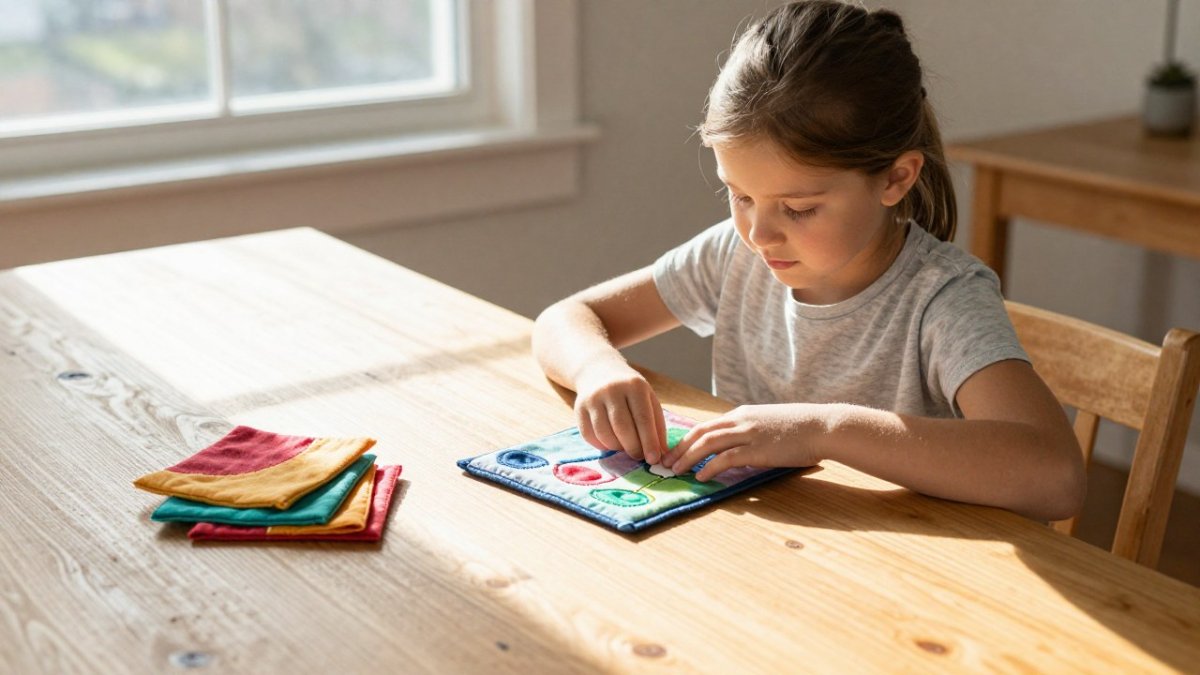
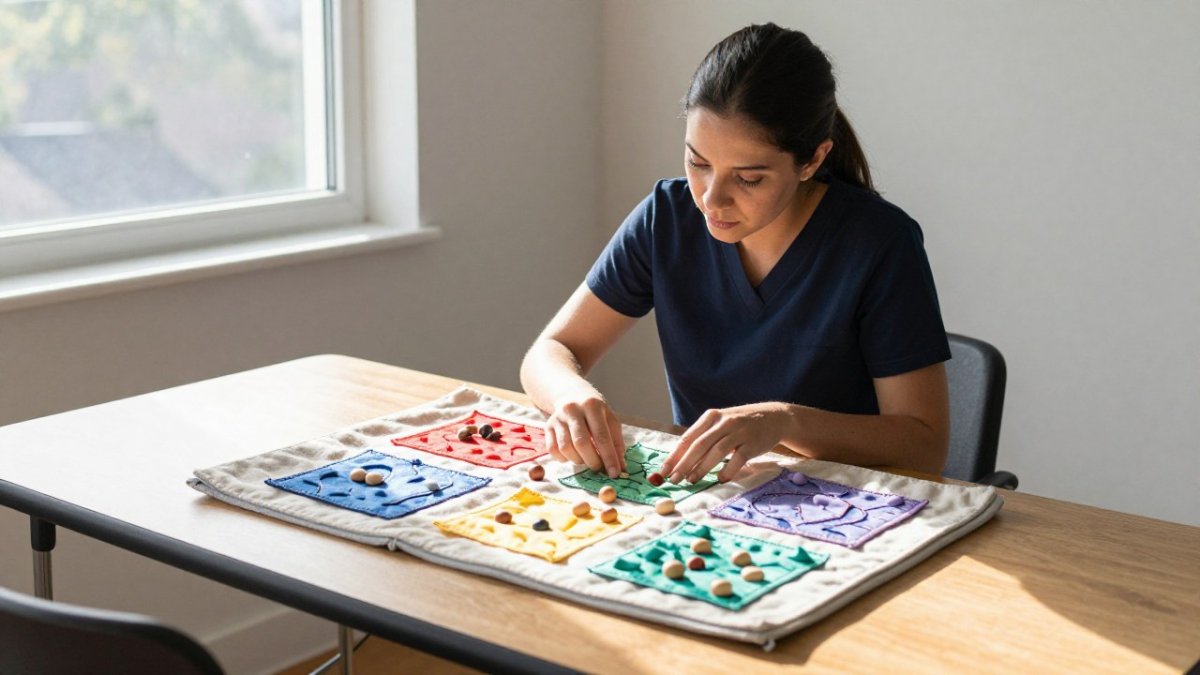
Sensory activities for children and adults are the most inclusive category, because the goal is handling and noticing rather than speed or strength. This is where tactile games earn their place.
Crafts, Coloring, and Painting Together
Crafts, coloring, and painting need almost no adaptation. Provide thicker grips for arthritis or reduced hand strength, and larger paper for low-vision participants.
Watercolor and colored pencils are forgiving. Acrylics are not, unless you want permanent stains on the tablecloth.
Gardening and Nature-Based Sensory Play
Gardening covers a wide range: planting seeds in cups, repotting, deadheading, or simply handling soil and leaves. For anyone who cannot kneel, raise the work to a table with a tray of potting mix.
Nature-based sensory play works indoors too. Collect leaves, pinecones, and stones on a walk, then sort them by texture, color, and size at the kitchen table. That sorting task doubles as fine motor practice.
Intergenerational Activities for Families: Reading, Storytelling, and Outdoor Fun
Intergenerational activities for families split into two reliable categories: quiet indoor formats and outdoor recreation. What separates a session that gets repeated from one that fizzles is whether the adult running it planned for the least mobile participant, the shortest attention span in the room, and the weather.
Reading Together and Storytelling
Reading together works at any age pairing if you match the book to the listener. Picture books suit young children and give older readers short, complete passages. A pattern most families land on:
Ages 3-6 with an older adult: one picture book, 8-12 minutes, child turns the pages, adult reads. Let the child interrupt, that is the point.
Ages 7-10 with an older adult: alternate paragraphs of a chapter book, 15-20 minutes, one chapter per session. Stop at the same point each time so there is something to look forward to.
Teens with an older adult: read the same book separately during the week, then discuss for 20-30 minutes. This works because it removes the performance pressure of reading aloud.
Storytelling goes further than reading. Ask an older adult to tell a childhood story, then have a child retell it back, that exercises memory and gives the child a role beyond listening. A prompt that reliably works: "Tell me about the house you grew up in," followed by "What did it smell like?" Specific sensory questions pull out detail that general ones do not.
Pro Tip Record the storytelling on a phone. Families consistently report that the recording becomes more valuable than the activity itself, and it costs nothing to capture.
Outdoor Play: Nature Walks, Swimming, Pickleball, and Mini Golf
Outdoor play covers the widest ability range of any category, since most outdoor activities have a seated or low-impact version.
Nature walks. Choose paved or packed-gravel paths, not root-covered trails, and look for loops under one mile with benches at intervals.
Pickleball. Played standing or from a chair with a shorter court.
Mini golf. Seated play is possible with a modified putter and a tee placed at chair height.
Watch Out Heat is the most common reason an outdoor session ends early and badly. Schedule before 10 a.m. or after 4 p.m. in summer, bring more water than you think you need, and set a hard stop time rather than waiting for someone to admit they are tired. Older adults and young children both regulate temperature less efficiently than the adults in the middle of the group.
For inclusive recreation programming guidance that applies directly to mixed-age groups, the National Recreation and Park Association publishes resources on adaptive and inclusive programming.
Indoor, Low-Cost, and Weather-Proof Alternatives
Weather and budget kill more intergenerational sessions than ability differences do. Keep indoor backups that need no special equipment:
Indoor nature walk: collect leaves, pinecones, and stones on a short outdoor trip, then sort them by texture, color, and size at the kitchen table. The sorting doubles as fine motor practice.
Kitchen table gardening: a tray of potting mix, paper cups, and seeds. Total cost is usually under $10 and the activity works for seated participants.
Indoor mini golf: plastic cups laid on their sides as holes, a soft foam ball, and a putter. Works in a hallway.
Each fits a 20-40 minute window, needs no more than a table or hallway, and sets up in under five minutes.
How to Adapt Engaging Activities for Intergenerational Play Across Abilities
Adaptation is the difference between an activity that works once and one that becomes a weekly habit. Three dimensions matter most: mobility, sensory needs, and cognitive load.
Need | Adaptation | Example |
Limited mobility | Bring the activity to a table or chair | Seated bingo, tabletop gardening |
Low vision | Increase size, contrast, and lighting | Large-print cards, bold colors |
Hearing loss | Reduce background noise, face the speaker | Quiet room, one speaker at a time |
Sensory sensitivity | Offer a calm exit and soft materials | Quiet corner, soft flannel textures |
Cognitive load | Simplify rules, shorten rounds | Drop scoring, play one round at a time |
For sensory-sensitive participants, the material matters as much as the format. Soft, quiet, tactile items tend to work better than loud, flashing, or unpredictable ones.
Planning and Facilitating Mixed-Age Sessions
Facilitation decides whether a session runs smoothly or falls apart in ten minutes. Plan around the least mobile participant, not the most energetic one, that single rule prevents most of the friction that makes mixed-age sessions feel like work.
A Session Structure That Holds Up
Seated warm-up (5-10 minutes). Start with something everyone can do from a chair, a simple card game, a name-and-favorite-color round, or passing a tactile object around the table. Nobody should be standing on the sideline while the activity starts.
Main activity (20-40 minutes). Pick one format, not three. A clear stopping point matters more than a long session. Announce the end in advance ("two more rounds") so nobody is surprised.
Shared snack or quiet conversation (10-15 minutes). This is where the actual relationship-building happens. Do not skip it to save time.
One closing question (2 minutes). Ask one question about what worked before everyone leaves. A single question, asked while the session is fresh, tells you more than any formal survey.
Balancing Different Skill Levels
The failure mode in mixed-age play is not boredom, it is one generation becoming an audience for the other. Three mechanics prevent that:
Handicap by role, not by score. Instead of letting the child win, give each player a different job. The older adult calls the numbers; the child moves the pieces. Both are essential.
Pair, don't separate. When skill gaps are wide, pair one older adult with one child rather than splitting into age groups. The pairing itself is the activity.
Cap the round, not the score. Play three rounds and stop, regardless of who is ahead. This removes the pressure to keep playing until someone loses.
Inviting Participation Without Pressure
Some participants will not join on the first invitation, especially older adults who feel managed. A pattern that works:
Give a named role before the activity starts. Caller, scorekeeper, story lead, or snack host. A named role keeps an older adult engaged past the first fifteen minutes and signals that they are a participant, not a guest.
Offer a seated option out loud. Say "you can play this from a chair" before anyone has to ask. Naming the option removes the stigma of taking it.
Let the first session be observation. Some participants need one session of watching before they join. Do not push. The second session is usually when they ask to play.
Pro Tip Assign each older adult one specific job before the session begins, not during it. Roles handed out mid-activity feel like an afterthought; roles assigned in advance feel like a position.
Measuring Whether It Worked
Most families and programs never check whether a session worked, so they repeat formats that quietly fail. Four free measures:
Repeat attendance. Did the same people come back? This is the single strongest signal.
Voluntary participation. Did anyone join without being asked? Count it.
Session length. Did the group stay past the planned end time, or drift away early?
A common pattern practitioners report is that the activity people name as their favorite is rarely the one the facilitator thought went best. Tracking the answers is how you find out.
Adapting on the Fly
Even a well-planned session will need one mid-course adjustment. Keep three levers ready:
Shorten the round. If attention is fading, cut the round in half rather than pushing through.
Lower the physical demand. Move from standing to seated, or from walking to tabletop, without announcing it as a downgrade.
Change the goal. If competition is creating tension, switch to a cooperative version where everyone wins or loses together.
For more on how shared tactile play supports development across the lifespan, the American Occupational Therapy Association publishes resources on sensory and motor skill development that we refer to often.
Frequently Asked Questions
What are some fun activities for different generations to do together?
Try board games, bingo, storytelling, arts and crafts, gardening, nature walks, and adapted sports like pickleball or mini golf. Sensory activities such as tactile games or coloring also work well because they need no special skills. The best options are low-pressure, adaptable, and let everyone participate at their own pace. Rotate between indoor and outdoor choices so energy levels and weather never stop the fun.
How do you plan an intergenerational activity that keeps everyone engaged?
Start by picking a shared interest, then choose an activity with flexible rules so kids, adults, and seniors can all join. Keep sessions to 30-60 minutes, prepare seating and water, and have a backup indoor option. Assign simple roles like scorekeeper or snack helper so everyone contributes. Afterward, ask what worked and adjust next time. Planning around abilities, not ages, is the key to keeping intergenerational play smooth.
How can you adapt activities for different ages and abilities?
Modify the rules, equipment, or pace rather than changing the whole activity. For mobility needs, offer chair-based versions of games like bingo or balloon volleyball. For sensory sensitivities, reduce noise and bright lights, and use soft tactile items. For cognitive needs, simplify instructions and use visual cues. Always have a low-energy option ready, and let participants choose their level of involvement without pressure.
What indoor activities can families of different generations enjoy?
Indoor options include board games, card games, bingo, coloring, painting, crafts, reading picture books aloud, storytelling, and sensory tactile games. You can also try technology games like family tree projects or paper plane contests. These activities are low-cost, weather-proof, and easy to adapt for mixed ages. Keep a basket of supplies ready so a spontaneous game is always possible.
Mixed-age sessions fail for predictable reasons: rules too complicated, materials that exclude someone, or an older adult with nothing to do. Witzkan builds handcrafted sensory-tactile games in Saegertown, Pennsylvania from soft American flannel, US child safety certified and designed for ages three to 103. Each game supports memory, coordination, and finger dexterity while giving every player a real role in the session. Explore Our Designs and find a game that works for your group.
Explore Our Designs

Comments