
How to Choose Special Education Teacher Professional Development
Last Updated: November 10, 2026
Quick Summary
Effective special education teacher professional development is specific, practical, and connected to real students, giving you a skill or routine you can test in your classroom this week. Choose training built around high-use practices, with clear goals, practice time, and follow-up. Professional development should respect your time and produce changes in your lessons.
Look for clear goals, practice time, follow-up, and a focus on real students.
Choose topics matching your biggest challenge, such as SDI, progress monitoring, or IEP goals.
Build training around high-use practices that carry across subjects and grade levels.
Screen free courses for credit, currency, specificity, and whether they ask you to practice.
Try one skill for two weeks and track what changes in your classroom.
Table of Contents
What Makes Special Education Teacher Professional Development Effective
Special Education Professional Development Topics That Matter Most
Free Online Professional Development for Special Education Teachers
Professional Development Ideas for Special Education Teachers
Peer Mentorship and Micro-Credentials: Low-Cost Routes to Growth
What Makes Special Education Teacher Professional Development Effective
Choosing the right professional development for special education teachers is harder than it looks. Many teachers sign up for trainings that sound useful, then find the content too general for their students. This guide focuses on what separates strong professional development options from weak ones.
Effective professional development is specific, practical, and connected to real students. It gives you a skill, a routine, or a tool you can test in your classroom this week.
Look for these signs of quality:
Clear goals: You know what you will be able to do afterward.
Practice time: You try the strategy, not just hear about it.
Follow-up: Someone helps you check whether it worked.
Real student focus: Examples match the learners you serve.
Good options also respect your time. A training that takes hours but changes nothing in your lessons is a poor use of your week.
Special Education Professional Development Topics That Matter Most
The topics below appear again and again in strong special education learning programs, and each one deserves more than a passing mention. Start with the area that matches your biggest classroom challenge, then read the short explanation so you know what good training on that topic actually looks like.
Specially designed instruction (SDI). SDI is the part of a student's program that is individually tailored: the content, methodology, or delivery is changed so the student can access the general curriculum.
Progress monitoring and data-driven instruction. This is the routine of giving short, repeatable checks, often one to three minutes, on a specific skill, graphing the results, and using the trend to decide whether to continue, adjust, or change an intervention. Good training gives you a probe schedule, a graphing template, and a decision rule (for example, four data points below the goal line triggers a review). If a course only talks about "using data" without a concrete decision rule, it is too vague to change your practice.
IEP development and mastery. Writing a goal a student can actually reach means getting the present levels right, choosing a measurable behavior, setting a realistic criterion, and naming how often you will collect evidence. Training here should walk through a full goal from present level to progress note, including common drafting errors such as goals that are too broad to measure or benchmarks that never connect to the annual goal.
Assistive technology integration. AT ranges from low-tech (a slant board, a pencil grip, a visual schedule) to high-tech (speech-to-text, text-to-speech, augmentative and alternative communication devices). Useful PD covers the full continuum, teaches a feature-matching process, matching the student's needs to tool features rather than to a brand, and addresses the paperwork side: documenting AT in the IEP and tracking whether the tool is actually being used.
Evidence-based instructional strategies. Look for training grounded in practices with a research base, such as explicit instruction, systematic feedback, and strategies that build toward independence. The test of a good course is whether it names the practice, shows it in a real lesson, and gives you a way to check your own fidelity, how closely you followed the steps, after you try it.
Behavior intervention plans. A BIP should follow a functional behavior assessment: identify the function of the behavior, teach a replacement skill, adjust the environment, and define how you will respond. Training that skips the function and jumps straight to rewards and consequences tends to produce plans that do not hold up.
A common mistake is choosing a topic because it is popular. Pick the one that will change your next week of teaching, and judge each option by whether it gives you a mechanism you can run, not just vocabulary you can repeat.
Building Professional Development Around High-Use Practices
High-use practices (HLPs) are core teaching actions that research links to better student outcomes. They give you a practical anchor for choosing training. When a program is built around HLPs, the skills tend to carry across subjects and grade levels.
Ask yourself which HLPs your students need most right now. For example, a teacher working with students who struggle to follow multi-step directions may focus on explicit instruction. A teacher supporting students with reading difficulties may focus on systematic feedback.
Choose training that asks you to practice these HLPs in planning, teaching, and reflection. Training that only lectures about them is less useful.
Free Online Professional Development for Special Education Teachers
A practical map of where free, legitimate special education PD actually lives, how to tell whether it is worth your time, and how to turn it into something you can put in your professional file.

Where free PD actually comes from. Several sources offer useful materials, and many are free to access:
Your state education agency. State departments of education publish PD calendars, webinar series, and technical assistance documents, often organized around special education compliance and instructional topics. These are usually free and frequently offer continuing education credit.
Professional associations. National and state associations for special educators, school psychologists, and related service providers post free webinars, toolkits, and recorded conference sessions, especially around major releases such as updated practice guides.
District and regional portals. Many districts and regional service agencies maintain internal libraries of recorded trainings. Ask your special education director whether you can access another district's public-facing library if yours is thin.
How to judge a free course before you invest an hour. Free does not mean shallow, but it does mean you have to screen faster. Run this checklist:
Credit: Does it offer a certificate of completion or continuing education credit, and does your state accept that provider? Credit rules vary by state, so confirm before you enroll, not after.
Currency: Is the content dated within the last few years, and does it reflect current practice? Special education guidance shifts, and an undated webinar is a warning sign.
Specificity: Does it include examples for your age group and student needs, or is it a general overview? A module with a sample lesson plan beats a slide deck of definitions.
Practice: Does it ask you to do something, draft a goal, graph a probe, plan a lesson, or only to listen?
A realistic free-PD plan. Free resources can help you test a topic before paying for deeper training. A workable sequence: pick one skill from your high-leverage practice list, find one free module or webinar that covers it, try the skill for two weeks, and log what changed. If the free resource is enough, you have saved the cost of a course. If it is not, you now know exactly what to look for in a paid option.
Watch out: a free webinar that ends in a sales pitch for a paid program is not really free PD. Check the agenda and the sponsor before you block the time.
The article's checklist for judging a free course can be scanned at a glance:
Check | What to look for | Why it matters |
Credit | Certificate or continuing education credit, accepted by your state | Credit rules vary, so confirm before enrolling |
Currency | Content dated within the last few years | Special education guidance shifts over time |
Specificity | Examples for your age group and student needs | A sample lesson plan beats general definitions |
Practice | Tasks like drafting a goal or graphing a probe | Listening alone changes little in your classroom |
Professional Development Ideas for Special Education Teachers
Beyond formal courses, you can build your skills through practical, low-pressure activities:
Observe a colleague: Watch how a peer runs a small-group lesson, then debrief afterward.
Try one strategy for two weeks: Track results in a simple log.
Join a study group: Read one article per month and discuss how it applies to your students.
Use a checklist: Note what worked and what you would change.
Keep your goals small. One well-tested strategy beats five ideas you never try.
Peer Mentorship and Micro-Credentials: Low-Cost Routes to Growth
Not every growth path requires a paid course. Peer mentorship pairs you with an experienced teacher who can answer questions and review your lessons. Many schools already have informal mentors; ask one for a regular 20-minute check-in. If you also want to collaborate with outside professionals, this guide on finding alternative therapists for special needs walks through where to look and what to ask.
Micro-credentials and digital badges are another option. These are short, skill-focused credentials that show you have mastered a specific practice, such as data collection or behavior support. They can be useful for your records and for discussing your growth with administrators.
Here is a simple way to combine them:
Pick one skill from your HLP list.
Find a free or low-cost micro-credential that covers it.
Ask a mentor to observe you using the skill and give feedback.
Document the result in your professional portfolio.
Protecting Your Time: Preventing Burnout While You Learn
Professional development should support your teaching, not add to your exhaustion. Teacher burnout is a real risk, especially when training piles onto an already full schedule. Protect your energy by setting limits before you start.
Helpful habits include:
Choose one course at a time, not several at once.
Schedule learning during planned time, not on weekends.
Stop a training that does not fit your current needs.
Rest after busy stretches before taking on new commitments.
If a program leaves you more stressed than prepared, that is useful information. Switch to a different option.
Planning Your Next Professional Learning Step
Start with one question: Which student challenge would improve most with a new skill? Write down your answer, then look for one resource that addresses it. Use the quality signs from the first section to judge options quickly.
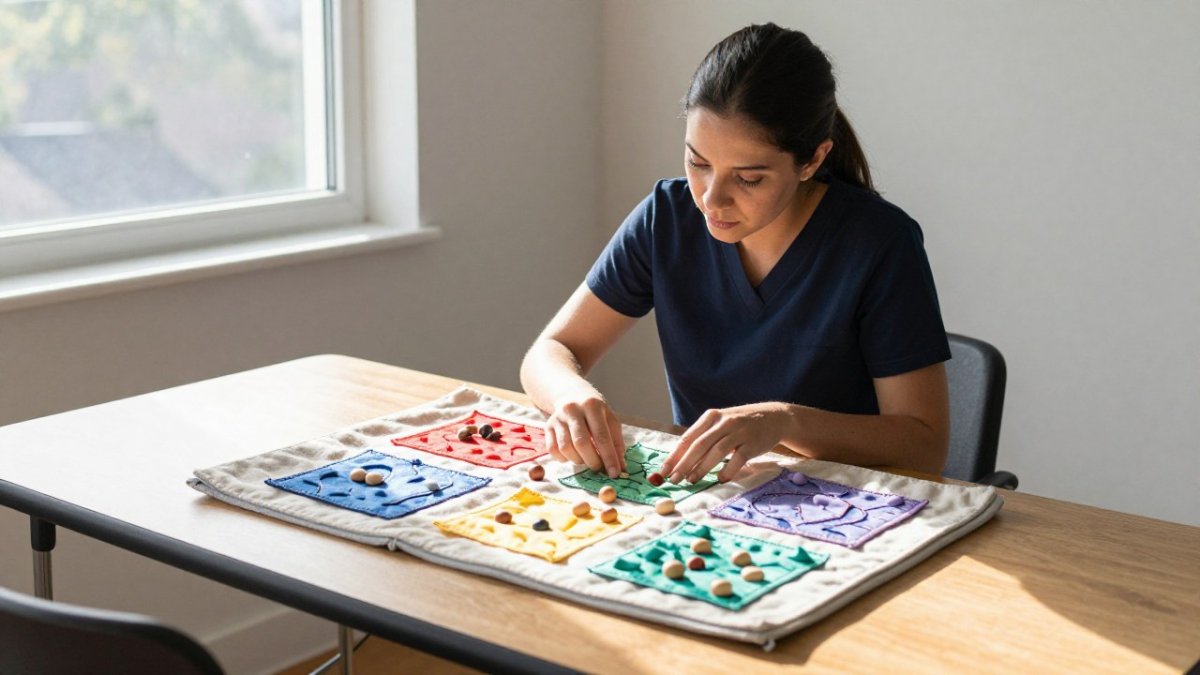
For practical sensory and classroom tools that support your learning goals, you can explore Witzkan's handcrafted sensory-tactile games and read our guide to educational tools for special education. Our sensory tools guide for occupational therapy practice may also help if your work includes sensory regulation.
Pick one training, set a two-week trial goal, and track what changes. Small, steady steps build real skill over time.
Frequently Asked Questions
What are some good professional development ideas for special education teachers?
Strong options include co-teaching training, instruction in evidence-based strategies, assistive technology workshops, and progress monitoring with data-driven decision making. Teachers can also join peer observation cycles or instructional coaching sessions tied to their caseload. Choose ideas that address a specific problem you see in your students' IEP goals this term, rather than collecting certificates. Starting with one focused topic usually produces more classroom change than attending many loosely related sessions.
How often should special education teachers receive professional development?
Research on effective professional learning generally favors sustained experiences over one-time workshops, so ongoing, job-embedded learning is the target. Many schools build in regular monthly collaboration plus a few intensive sessions each year. Individual teachers can pace their own learning by setting one small goal per quarter. The right frequency depends on district requirements and the teacher's current needs, so confirm local expectations with your administrator.
Are there free professional development resources for special education teachers?
Yes. Free options include free online professional development for special education teachers through state education agency websites, university outreach programs, and professional association webinars. Many professional organizations offer free member resources or introductory content. Peer-led study groups and reading a shared book with colleagues cost nothing beyond time. Before enrolling, check whether a free offering provides continuing education units, since that varies by state and district.
How can teachers apply professional development in the classroom?
Apply new learning in a small, measurable way: pick one strategy, teach it for two to four weeks, and track student response with simple progress data. Ask a colleague to observe and give feedback. Reflect on what worked and adjust before expanding. This cycle of practice, measurement and reflection turns a workshop into lasting instructional change, and it gives you concrete evidence to share during IEP meetings.


Comments