.png)
How to Improve Dexterity in Seniors: 7 Exercises
Table of Contents
Why Dexterity Matters for Seniors
Hand Exercises for Seniors to Build Strength
Fist Clenches and Releases
Hand-Strengthening Presses
Finger Dexterity Exercises for Seniors
Finger Lifts and Individual Finger Movement
Finger Taps and Coordination Practice
Thumb-to-Finger Touches
Grip Strength Exercises for Older Adults
Activities to Improve Manual Dexterity
Tactile Games and Puzzles
Everyday Tasks That Build Dexterity
Creating a Progressive Routine
Beginner Routine (Weeks 1-2)
Intermediate Routine (Weeks 3-4)
Advanced Routine (Weeks 5-6)
Maintenance Routine (Week 7 and Beyond)
Key Principles for Safe Progression
Measuring Functional Progress
Safety and When to Seek Medical Advice
When to Stop and Seek Medical Evaluation
Adapting Exercises for Common Conditions
Working with a Professional
Tracking Progress and Staying Motivated
Frequently Asked Questions
Last Updated: October 11, 2026
Why Dexterity Matters for Seniors
Hand dexterity, the ability to move your fingers and hands with precision and control, is essential for senior independence. When hand strength and finger coordination decline, everyday tasks like opening jars, buttoning clothes, writing, and cooking become harder.
The good news: dexterity isn't fixed. Targeted practice with tactile activities and purposeful hand exercises restore fine motor skills. Regular practice strengthens muscles, improves nerve signals, and rebuilds coordination.
Arthritis, reduced circulation, and nerve damage all affect hand function. But many seniors regain significant capability through consistent, gentle exercise by starting where they are and progressing gradually.
Key Takeaway Hand dexterity directly impacts independence. Seniors who maintain finger strength and coordination stay more active, confident, and able to care for themselves.
Hand Exercises for Seniors to Build Strength
Building hand strength requires targeted work on your palms, fingers, and wrist. Start with 5-10 repetitions and progress as strength improves.
Fist Clenches and Releases
Make a fist by curling all your fingers inward, then hold for 3-5 seconds. Release slowly and spread your fingers wide. Repeat 10 times per hand. This simple movement wakes up the muscles that control grip and is an easy entry point into hand exercise routines.
Hand-Strengthening Presses
Place a soft stress ball or therapy putty in your palm. Squeeze gently for 3-5 seconds, then release. Repeat 10-15 times per hand. Therapy putty offers adjustable resistance: softer putty for beginners, firmer putty as you progress.
Pro Tip Therapy putty is inexpensive and lasts for months. Keep it in your pocket or on a bedside table so you can squeeze during TV time or while reading.
Finger Dexterity Exercises for Seniors
Finger dexterity requires isolating individual fingers and coordinating them together. These exercises improve how to improve dexterity in seniors by targeting the small muscles between your fingers.
Finger Lifts and Individual Finger Movement
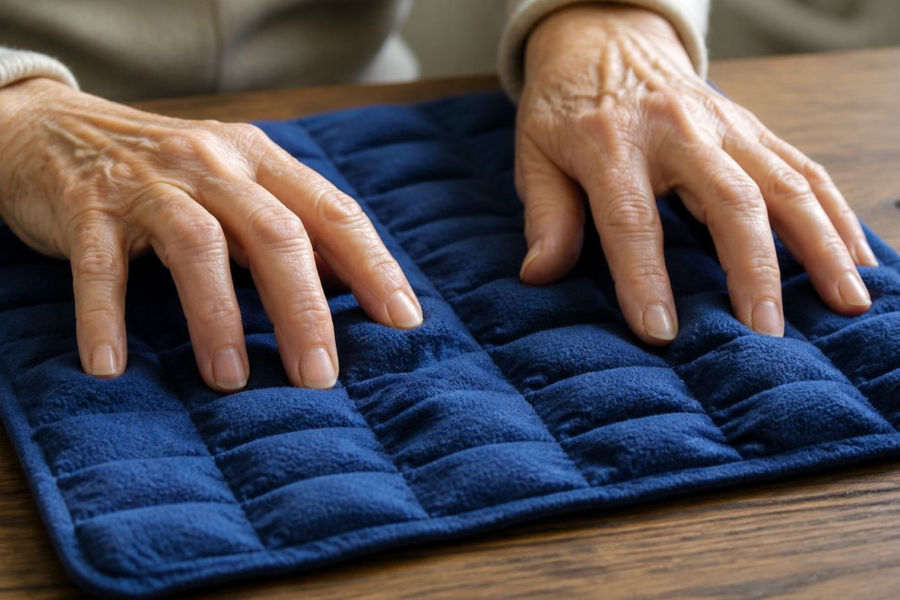
Place your hand flat on a table, palm down. Lift one finger at a time, holding each lift for 2 seconds. Repeat with each finger, then switch hands. Finger lifts train the muscles that let you move each digit independently, which matters for writing, typing, and fine tasks.
Finger Taps and Coordination Practice
Tap each finger to your thumb in sequence: index, middle, ring, pinky. Then reverse the order. Do 3 sets of 10 taps per hand. Finger taps connect your brain to each digit and build coordination and speed.
Thumb-to-Finger Touches
Touch your thumb to your index finger, then to your middle, ring, and pinky. Repeat 10 times, then reverse. Do 3 sets per hand. Thumb-to-finger touches improve the precision grip you need for small objects.
Watch Out Stop immediately if you feel sharp pain in your joints. Mild muscle fatigue is normal; joint pain signals you need to rest or modify the exercise.
Grip Strength Exercises for Older Adults
Grip strength predicts overall health and longevity in seniors. Squeeze a soft ball for 5 seconds, rest for 5 seconds, and repeat 10 times twice daily. Progress to a firmer ball as strength improves. Many seniors see noticeable improvement in opening jars and carrying groceries within 2-3 weeks of consistent practice.
Balance Builders by Doug Weiss
Activities to Improve Manual Dexterity
Real-world activities that challenge your hands build practical skills. These activities to improve manual dexterity blend therapy with enjoyment.
Tactile Games and Puzzles
Puzzles, string games, bead sorting, and tactile boards challenge your fingers while engaging your mind. Sensory-tactile games designed for all ages combine tactile feedback with cognitive engagement.
Everyday Tasks That Build Dexterity
Knitting, sewing, cross-stitching, macrame, and cooking tasks like peeling and chopping build fine motor skills in functional contexts. These activities demand precision and control, and your brain learns through repetition in meaningful tasks.
Creating a Progressive Routine
A structured routine prevents injury and builds confidence. Start conservatively and advance only when the current level feels manageable. Most seniors see noticeable improvement within 3-4 weeks.
Beginner Routine (Weeks 1-2)
Frequency: 5-6 days per week (one rest day) Duration: 10 minutes When: Morning is ideal; hand stiffness is often worst upon waking.
Exercises:
Fist clenches and releases: 2 sets of 10 reps per hand
Finger lifts: 2 sets of 8 reps per hand (lift each finger individually, hold 2 seconds)
Soft ball squeezes: 2 sets of 10 reps per hand (squeeze for 3 seconds, rest 3 seconds between reps)
How to know you're ready to progress: By the end of week 2, exercises should feel easier and you should complete all reps without fatigue.
Intermediate Routine (Weeks 3-4)
Frequency: 5-6 days per week Duration: 12-15 minutes
Add to the beginner routine:
Finger taps and coordination practice: 2 sets of 10 taps per hand (tap each finger to thumb in sequence, then reverse)
Thumb-to-finger touches: 2 sets of 10 reps per hand
Increase ball squeezes to 15 reps per set
Progression cue: If you can complete all reps with good form and without fatigue, you're ready to advance.
Advanced Routine (Weeks 5-6)
Frequency: 5-6 days per week Duration: 15-20 minutes
Modifications:
Progress to medium-resistance therapy putty (firmer than the soft putty used in weeks 1-2)
Increase fist clenches to 3 sets of 15 reps
Add tactile activities: 5-10 minutes of puzzles, bead sorting, or simple sewing
Introduce functional practice: button and unbutton a practice board or old shirt, pick up small objects (coins, beans) and place them in a container
Maintenance Routine (Week 7 and Beyond)
Frequency: 4-5 days per week (you can reduce frequency once strength plateaus) Duration: 10-15 minutes
Maintain the advanced routine, rotating between:
2-3 days of structured exercises (fist clenches, finger lifts, taps, thumb-to-finger touches)
2-3 days of functional activities (knitting, sewing, cooking tasks, writing, puzzles)
Once you've built strength, mixing exercise and activity prevents boredom and keeps your hands engaged.
Key Principles for Safe Progression
Never skip steps. Moving too fast causes injury and setback. Rest matters. One rest day per week allows muscle recovery. Pain is a stop signal. Muscle fatigue is normal; joint pain, sharp twinges, or numbness are not. Track what you do. Keep a simple log of date, exercises, reps, and how your hands felt. After 4 weeks, review it to see progress.
Measuring Functional Progress
Strength gains matter only if they translate to easier daily life. Every 2 weeks, test yourself on real tasks:
Grip: Can you open a jar that was difficult 2 weeks ago? Try opening a new jar of the same type and note if it's easier.
Fine motor: Button and unbutton a shirt. Is it faster or smoother than before?
Dexterity: Pick up 10 small objects (coins, beans, buttons) one at a time and place them in a cup. Time yourself. Faster completion or fewer dropped objects = progress.
Writing: Write a short paragraph by hand. Is your handwriting clearer? Does your hand tire less quickly?
Reach: Can you grasp objects at awkward angles (under a table, behind your back) more easily?
These functional measures are more meaningful than reps or resistance level. They show you that your effort translates to real independence.
Pro Tip Pair your routine with a specific time and place. Exercising while watching a favorite TV show or after breakfast creates a habit that sticks. Habit removes the need for willpower.
Safety and When to Seek Medical Advice
Hand pain and stiffness can signal arthritis, nerve damage, or circulation problems. These conditions may demand exercise modifications rather than avoidance.
When to Stop and Seek Medical Evaluation
Stop exercising immediately and consult a healthcare provider if you experience:
Sharp or shooting pain in joints, This differs from muscle fatigue and may indicate joint inflammation or structural damage.
Numbness or tingling that persists beyond a single session, May signal nerve compression, poor circulation, or neuropathy (common in diabetes).
Swelling that doesn't subside within 24 hours, Indicates inflammation that needs professional assessment.
Sudden weakness in your hand or fingers, Can suggest nerve or circulation changes requiring urgent evaluation.
Color changes (pale, red, or blue fingers), Points to circulation problems.
Mild muscle soreness 24-48 hours after starting new exercises is normal and typically fades with rest. If soreness persists or worsens after a week, reduce intensity and frequency.
Adapting Exercises for Common Conditions
Arthritis: Warm your hands before exercising by soaking in warm water for 5-10 minutes. Use softer therapy putty and avoid high-resistance grippers. Finger lifts and taps are often better tolerated than squeezing. Work with an occupational therapist to identify which exercises your specific arthritis type tolerates best.
Stroke-Related Changes: After stroke, one hand may have reduced control or sensation. Start with gentler, slower movements. Pair exercises with functional tasks like picking up small objects or writing to retrain neural pathways. An occupational therapist can design asymmetrical routines that challenge the weaker hand.
Neuropathy (Nerve Damage): Diabetes, chemotherapy, and other conditions cause neuropathy, reduced sensation and sometimes pain in fingers. If you have neuropathy, avoid exercises that rely on feeling resistance (you may squeeze too hard and cause injury without realizing it).
Reduced Circulation: Poor circulation makes hands cold and slows healing. Warm your hands before and after exercise. Avoid prolonged gripping, which can cut off blood flow. Finger lifts and taps are safer than sustained squeezing. If your fingers turn pale or blue during exercise, stop immediately and warm your hands.
Working with a Professional
Occupational therapists specialize in hand function and can assess your specific limitations, recommend equipment modifications, and design a personalized routine. Many insurance plans, including Medicare, cover occupational therapy when ordered by a physician for hand dysfunction or post-stroke rehabilitation. A single session often clarifies which exercises suit your condition and which to avoid. If you have arthritis, diabetes, neuropathy, or a history of stroke or hand injury, consulting an occupational therapist before starting a new routine is wise.
Watch Out Numbness, tingling, color changes, or sudden weakness require medical evaluation before beginning or continuing exercise. These symptoms may indicate nerve compression, poor circulation, or other conditions that need professional assessment.
Tracking Progress and Staying Motivated
Measure progress by function, not just strength. Can you open jars more easily? Button your shirt faster? Write with better control? These real-world improvements matter most.
Keep a simple log. Note which exercises you do daily and how many reps you complete. After 4 weeks, review your log. Most seniors see measurable improvement in strength and coordination by this point.
Pair exercises with enjoyable activities. Do hand exercises while watching TV. Practice finger dexterity during a puzzle session. This makes the routine sustainable long-term.
Celebrate small wins. Regaining the ability to knit, play an instrument, or write clearly is meaningful. These victories fuel motivation to continue.
Maintaining hand strength and how to improve dexterity in seniors requires consistency, not intensity. The exercises and activities covered here work because they target real muscles and rebuild real skills. Start today with fist clenches and finger lifts. At Witzkan, we believe tactile engagement, whether through handcrafted sensory tools or everyday activities, supports the coordination and strength that keeps seniors independent.
Frequently Asked Questions
How often should seniors do hand and finger exercises?
Seniors benefit from daily hand and finger exercises, ideally 5-10 minutes per day. Consistency matters more than duration. Start with three times weekly if daily practice feels overwhelming, then gradually increase frequency. Many occupational therapists recommend spreading exercises throughout the day rather than doing them all at once, which helps maintain hand function and reduces fatigue.
Can dexterity be improved in seniors?
Yes, dexterity can be improved at any age through regular practice and targeted exercises. Hand and finger dexterity respond well to repetition and progressive challenge. Seniors who engage in consistent finger exercises, tactile activities, and fine motor tasks often see noticeable improvements in grip strength, coordination, and the ability to perform daily activities like writing, buttoning, and cooking within weeks.
What should I do if hand pain or weakness worsens despite exercises?
Stop the exercises and contact your doctor if you experience sharp pain, sudden weakness, numbness, or tingling that doesn't improve within a few days. These symptoms may indicate arthritis, nerve compression, or other conditions requiring medical evaluation. Your doctor can refer you to an occupational therapist who can assess your specific needs and recommend modifications or alternative treatments tailored to your situation.
Which everyday activities help improve manual dexterity?
Knitting, sewing, needlepoint, cross-stitching, and playing musical instruments all build manual dexterity naturally. Gardening, cooking (chopping, stirring), writing by hand, and manipulating locks and latches also strengthen finger coordination and grip. Tactile games and puzzles that require fine hand movement are particularly effective. The key is choosing activities you enjoy so you'll practice regularly and stay motivated.
Explore Our Designs


Comments