
What Brain Health Activities Actually Work After 40?
Last Updated: November 2, 2026
Quick Summary
The brain health activities that actually work after 40 are a mix of movement, sleep, social connection, and genuinely challenging mental tasks. Physical activity, sleep, social contact, and managing blood pressure and blood sugar have the strongest evidence, while puzzles and games are the enjoyable layer on top.
Do 10 to 15 minutes of a puzzle or word game, three to four days a week, rotating types.
Add one new-skill session a week of at least 15 minutes with a clear next level.
Aim for 20 to 30 minutes of brisk walking most days, plus two short strength sessions weekly.
Protect sleep first during menopause, since brain fog often lifts when sleep does.
Talk to a doctor if memory slips affect work, bills, or safety.
Table of Contents
Why Brain Health Activities Matter More After 40
Brain health activities are the everyday habits and challenges that keep your mind sharp, your memory strong, and your focus steady as you age.
That shift is normal. But it is not one you have to accept without a fight.
This guide from Witzkan covers what actually helps, what the evidence supports, and what to skip. We build tactile games for ages three to 103, so we spend a lot of time thinking about how hands, memory, and conversation work together.
Here is the honest version: no single puzzle will rescue your memory. For a broader natural approach to staying cognitively young, see How Can You Keep Your Brain Young Naturally? A mix of movement, learning, social contact, and real challenge does more than any one activity.
Brain Exercises for Women Over 40: What the Evidence Supports
Brain exercises work best when they are genuinely hard, varied, and dosed correctly. A puzzle you can finish on autopilot stops helping. The mental challenge has to stay just past comfortable, what researchers call desirable difficulty.
A common mistake is treating one app or one crossword habit as a complete plan. Variety matters more than volume, and so does honesty about what the research actually shows.
What the Evidence Actually Says (and Doesn't)
Here is the part most listicles skip. Cognitive training studies reliably show that people get better at the specific task they practice. The evidence that those gains transfer broadly to everyday memory, planning, and recall is much weaker.
That does not mean puzzles are useless. It means they belong in a mix, not at the center of it. The activities with the strongest evidence for supporting cognitive health in midlife are physical activity, sleep, social connection, and managing cardiovascular risk factors like blood pressure and blood sugar.
Key Takeaway Treat brain games as one useful piece, not the whole answer. If a product promises to prevent dementia, that claim is ahead of the evidence.
Puzzles, Games, and Pattern Recognition
Crossword puzzles, word searches, Sudoku, and card games all count as cognitive stimulation. They ask for recall, attention, and pattern recognition at the same time.
Crossword puzzles build vocabulary and verbal recall, the exact skill that feels rusty in midlife when names take longer to surface
Sudoku trains working memory and logic
Card games add rules, counting, and social pressure
Many women find that a mix works better than one favorite. Rotate them across the week, and step up the difficulty when a puzzle starts feeling automatic. A crossword you finish in five minutes flat is no longer challenging your recall, move to a harder puzzle or a different format.
Reading, Vocabulary, and Learning New Skills
Reading is the easiest mental fitness habit to keep. It is cheap, portable, and easy to scale up or down.
Learning something new pushes harder. A language, a musical instrument, or a new craft forces the brain to build fresh pathways rather than reuse old ones.
A practical midlife-friendly approach: pick one skill with a visible progression (a language app's levels, a knitting pattern's complexity, a song's difficulty) so you can tell when you have outgrown the current challenge.
How Often, and How Hard
Short, frequent sessions generally work better than long, occasional ones. A workable pattern:
10-15 minutes, 3-4 days a week of a puzzle or word game, rotating types
One new-skill session a week of at least 15 minutes, with a clear next level to aim for
Difficulty check monthly, if it feels easy, move up or switch formats
If you are squeezing brain games in at the expense of sleep or a walk, you have the priority order backwards. Sleep and movement do more for midlife cognition than any puzzle app.
Watch Out Be skeptical of apps that advertise memory gains beyond the game itself, and of supplements marketed for brain health. Neither has strong evidence behind broad cognitive benefits.
Exercise for Brain Health: Movement That Counts
Exercise for brain health is the single most reliable lever you have.
You do not need a gym. A brisk walk counts.
Cardio: 20-30 minutes of brisk walking, cycling, or swimming
Strength: two short sessions a week with weights or bands
Balance and coordination: yoga, tai chi, or dancing
A common approach is to pair movement with something social. A walking group checks two boxes at once.
Physical Activity Guidelines for Americans recommends regular aerobic activity for adults, and notes that some activity is better than none.
Watch out: jumping straight from no exercise to daily hard cardio is the fastest way to quit.
Brain Health During Menopause: Sleep, Stress, and Brain Fog
Brain health during menopause is where most advice falls short. Brain fog is real, and it is common.
The cause is usually a mix, not one thing. Sleep disruption, stress, and shifting hormones all play a part.
What helps most:
Protect sleep first. A consistent bedtime and a dark, cool room do more than any supplement
Cut the stress load where you can. Chronic stress wears on attention and concentration
Keep moving. Exercise routine consistency helps mood and sleep together
If brain fog arrives with low mood, poor sleep, or heavy stress, treat those first. The fog often lifts when the sleep does.
Tactile and Social Activities That Keep Memory Sharp
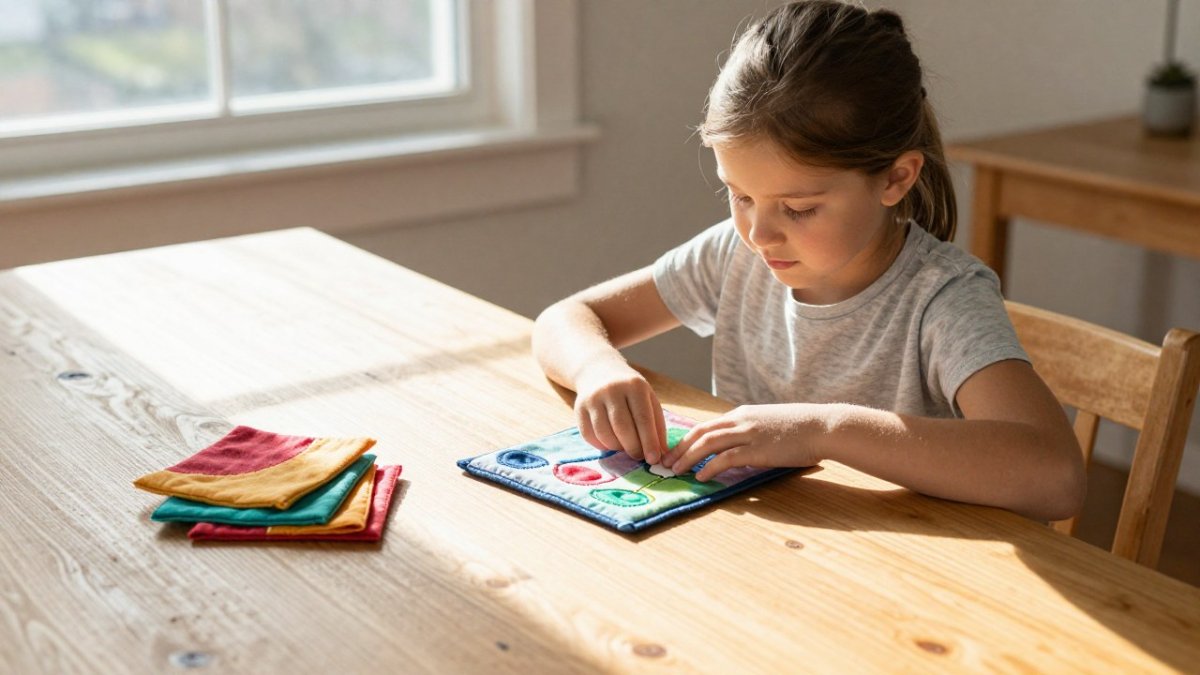
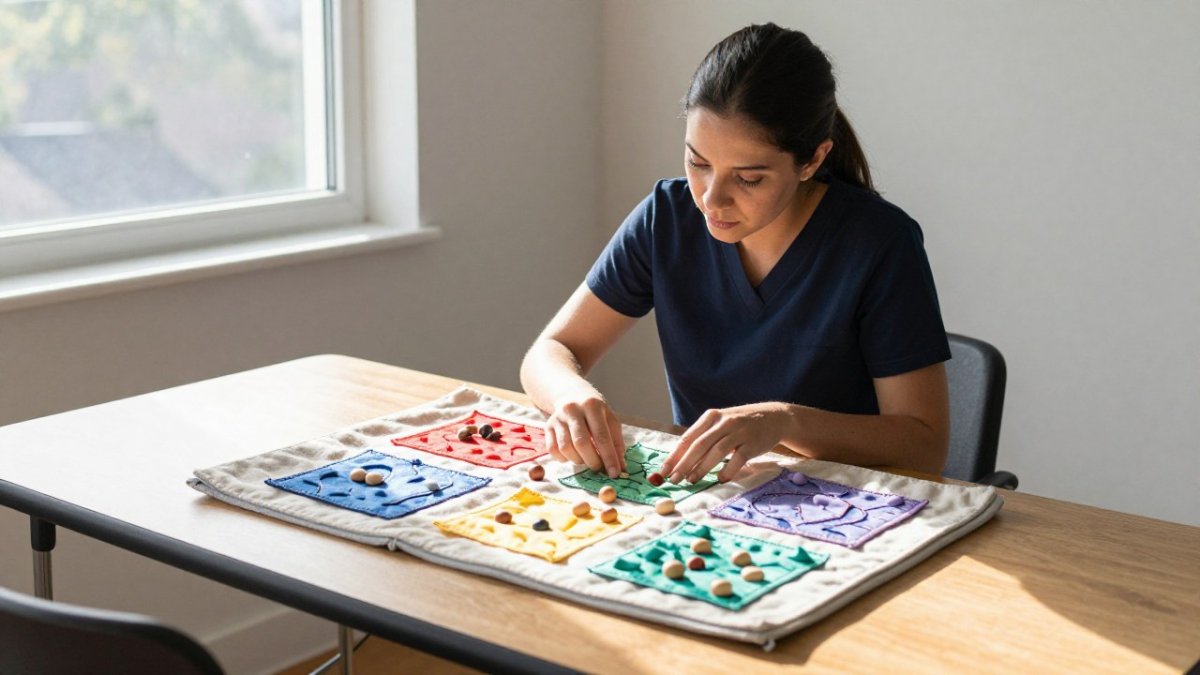
Social engagement and touch are underrated brain health activities. Conversation asks for memory, attention, and quick recall all at once. Hands-on activity adds coordination and finger dexterity to the mix.

A memory game you play with someone else combines memory, conversation, and shared attention in one sitting.
Practical options that work well after 40:
A tactile memory game played face to face
Cooking a new recipe together, which uses memory, planning, and hands
Card games with a partner or a small group
For a deeper look at hands-on memory work, see our guide to tactile games for memory recall. If you want ideas that span generations, our piece on intergenerational play activities covers games that work for a seven-year-old and an eighty-two-year-old at the same table.
The social side matters as much as the tactile side.
Building a Daily Brain Health Routine That Sticks
A daily brain health routine should take minutes, not hours. The plan that survives a busy week beats the perfect plan you abandon by Thursday. The goal is a sustainable baseline you can build on, not a heroic week you cannot repeat.
Here is a simple weekly structure, with a low-effort version for busy weeks and a step-up version once the baseline holds:
Day | Activity | Time | Why It Works |
Most days | Brisk walk | 20-30 min (or 10-min chunks) | Cardio, mood, blood flow |
3 days a week | Puzzle or word game | 10-15 min | Attention and recall |
2 days a week | Strength or yoga | 20 min | Coordination and balance |
Weekly | Social game night | 30-45 min | Memory plus conversation |
Ongoing | One new skill | 15 min | Builds new pathways |
Three Tiers: Pick the One That Fits Your Week
Most advice assumes you have an hour and a gym. Real life is messier. Choose the tier that matches your current capacity, then move up when it feels easy.
Starter tier (busy weeks, tight budget, low fitness):
Two 10-minute walks a day, split around meals
One 10-minute puzzle or word game, three days a week
One phone call or coffee with a friend each week
Steady tier (the default plan above):
20-30 minutes of brisk walking most days
Puzzles three days a week, strength or yoga twice
A weekly social game or meal with others
Step-up tier (once the steady tier is automatic):
Add one longer weekend walk or hike
Add a second social activity per week
Take on a skill with a clear progression, a language level, a harder instrument piece, a more complex craft
Progression: The Rule Most Routines Miss
Frequency matters less than progression. A routine that never gets harder stops challenging your brain, even if you keep doing it. Two rules keep it going:
Stack new habits onto existing ones. A puzzle with your morning coffee, a walk after lunch, a game night on the same weeknight. Anchoring to an existing cue is what makes habits survive.
Progress the difficulty every few weeks. Once a puzzle feels easy, move up a level or switch types. Once a walk feels comfortable, add five minutes or a hill. Once a game night feels routine, try a new game with unfamiliar rules.
A memory game with a friend is easier to keep than a solo app. People show up for other people, and the social layer is doing real work for your brain, not just your calendar.
Pro Tip If you only do one thing this week, add a single 10-minute walk and one puzzle. Build from there. A routine you actually keep beats an ambitious one you quit.
What to Ignore and When to Talk to a Doctor
Be cautious with anything that promises a fast fix, and with supplements marketed for memory.
Be skeptical of brain scans sold directly to consumers as a memory check. Cognitive tests belong in a clinical setting, with a professional reading the results.
Talk to a doctor if you notice:
Memory slips that affect work, bills, or safety
Getting lost on familiar routes
Trouble with words or numbers that is getting worse
These signs do not mean something is wrong. They mean a professional should take a look. Getting checked early is the smart move, not the scary one.
Finding a Tactile Game That Fits Your Routine
The best tactile game is the one you will actually play, with someone, more than once. That means matching the game to your hands, your schedule, and your people.
Look for these qualities:
Soft, forgiving materials that feel good to touch
Simple rules you can teach in a minute
Enough challenge to keep attention engaged
This is the standard we build to at Witzkan.
You can browse the pattern options to find a design that suits your table, or see the full product range in one place.
Frequently Asked Questions
What activities help improve brain health after 40?
A mix works better than any single activity. Combine mental challenges like crossword puzzles, Sudoku, and learning a new skill with regular cardio, strength work, and social time. Reading, word searches, card games, and tactile activities that involve your hands all count. The goal is variety and consistency rather than one perfect exercise. Aim for something mentally engaging most days, physical activity several times a week, and regular contact with friends or family.
What are the best brain exercises for women over 40?
The best brain exercises for women over 40 are the ones you will actually repeat. Crossword puzzles, word searches, Sudoku, card games, and board games all provide cognitive stimulation. Learning something genuinely new, like a language, a musical instrument, or chess, pushes pattern recognition and problem-solving harder than repeating familiar puzzles. Pair mental challenges with physical activity and social engagement for the strongest effect on cognitive function and memory.
How often should you do brain-training activities?
Most days is a reasonable target, and short sessions beat occasional long ones. Fifteen to twenty minutes of puzzles, reading, or a memory game daily, plus a few longer learning sessions each week, keeps cognitive stimulation steady. Rotate activities so you are not repeating the same task until it becomes automatic. If you are building a daily brain health routine, tie it to an existing habit like morning coffee or an evening wind-down so it survives busy weeks.
Can physical exercise support brain health?
Yes. Regular exercise for brain health is one of the better-supported habits, particularly cardio like brisk walking, cycling, or swimming. Movement supports blood flow and cognitive function, and it also improves sleep and mood, which matter for memory and concentration. Strength training and balance work help too, especially as you get older. You do not need intense workouts; consistent moderate activity several times a week is a solid starting point.
Your brain after 40 is not a lost cause, and it is not a problem one puzzle can solve. It responds to movement, challenge, sleep, and other people. Witzkan makes handcrafted, sensory-tactile games that bring memory practice and conversation to the same table, with soft American flannel, inclusive design for ages three to 103, and US child safety certification behind every piece. Get started with Witzkan and give your weekly routine a tactile, social activity you will actually keep.

Comments