
Why Choose Handcrafted Sensory Toys: A Parent's Guide
Table of Contents
Why Handcrafted Sensory Toys Stand Apart
The Benefits of Sensory Toys That Mass Production Misses
Safe Sensory Toys for Children: What Certification Actually Means
How Handcrafted Design Builds Hand Strength and Coordination
Sensory Toys for Autism: Why Tactile Calm Matters
Materials and Durability: What You're Actually Paying For
A Toy for Ages Three to 103: Inclusive Play in Practice
Conclusion
Frequently Asked Questions
Last Updated: October 18, 2026
Why Handcrafted Sensory Toys Stand Apart
Most parents have a toy bin full of plastic light-up gadgets that got old fast. Handcrafted sensory toys work differently. This guide from Witzkan explains why the toys you choose for your child matter more than most catalogs admit.
Here is the core difference. A mass-produced toy is built to survive a shipping container and a retail shelf. A handcrafted toy is built to survive a toddler. Those are not the same goal, and the gap shows up in your child's hands.
At Witzkan, we sew every game in Saegertown, Pennsylvania from soft American flannel. We build for one purpose: real tactile play that holds up.
Below, we break down what you actually get when you choose handcrafted over mass-produced, from safety paperwork to how the seams hold up after a year of daily use.
The Benefits of Sensory Toys That Mass Production Misses
The biggest gap is not price. It is attention to the parts your child actually touches.
Mass production rewards speed. Factories optimize for units per hour, so they pick materials that run cleanly through machines: stiff plastics, printed vinyl, synthetic stuffing. Those materials feel the same every time, which is efficient but flat.
A handcrafted toy gets built around the senses instead. The benefits of sensory toys come from variety: different textures, weights, and resistances that ask small hands to adapt. Flannel, felt, and layered fabric give a child contrast that a smooth plastic shell cannot.
Soft fabric teaches gentle grip; hard plastic teaches only force
Varied textures build tactile discrimination, a real pre-writing skill
Quiet materials support calming play instead of overstimulation
Fewer battery-driven features mean more imagination and conversation
What most guides miss is that sensory play is about feedback, not entertainment. A toy that responds differently each time your child squeezes it teaches more than one that flashes the same light.
Safe Sensory Toys for Children: What Certification Actually Means
Safe sensory toys for children are not just toys without sharp edges. Safety is a paper trail, and you can ask for it.
In the United States, children's products fall under federal rules enforced by the Consumer Product Safety Commission. A legitimate maker should be able to show a Children's Product Certificate, which states the product passed required third-party testing (Children's Product Certificate).
Witzkan holds a Children's Product Certificate for our sensory games. That is not marketing language. It is a document you can request.
Here is what to check before you buy anywhere:
Ask for the Children's Product Certificate by name
Confirm which lab performed the testing
Check that the age range on the label matches your child
Look for small parts warnings if anyone under three is in the house
Ask what the seams and fasteners are made of, not just the outer fabric
Watch Out A toy can look soft and still fail safety rules. Loose buttons, unsecured zipper pulls, and weak seam stitching are the most common choking and detachment risks. If a seller cannot name their certification, walk away.
How Handcrafted Design Builds Hand Strength and Coordination
Sensory toys for hand strength and coordination work because they add resistance to ordinary movements. A zipper asks for a pincer grasp. A button asks for a twist and pull. A textured panel asks for a deliberate press.

Mass-produced toys rarely build these skills on purpose. A push-button toy needs one motion. A handcrafted fabric game layers several motions into one activity, so practice happens without your child noticing they are practicing.
Occupational therapists call this graded resistance. In plain terms: the toy should be a little hard, but not frustrating. A child who has to work slightly to open a snap is building the same muscles used for holding a pencil.
Our design choice matters here. Flannel has give, so small hands can grip it fully without slipping. That grip-and-pull motion is exactly what builds finger dexterity over time.
Sensory Toys for Autism: Why Tactile Calm Matters
Sensory toys for autism serve a different job than skill-building toys. Their first job is regulation.
Many children with sensory sensitivities get overwhelmed by noise, bright lights, and unpredictable textures. A calm, quiet, predictable object gives them something steady to hold while the rest of the room settles down.
That is why material choice matters so much. Soft flannel feels the same every single time. There is no battery hum, no flashing, no surprise sound. The predictability is the point.
A common mistake is buying a busy toy for a child who needs a quiet one. More features usually mean more input, and more input is often the opposite of what a dysregulated child needs.
What we hear from caregivers is simple: the toy that gets used is the one that feels safe to touch. Weight, softness, and a familiar texture do more than any light show.
Pro Tip Keep one calming tactile toy in a dedicated spot, like a bag or a shelf by the door. Children regulate faster when the comforting object has a predictable home and does not have to be hunted for.
Materials and Durability: What You're Actually Paying For
Durability is where the handcrafted argument gets practical. You are paying for materials and time, not packaging.
A mass-market toy often uses a thin outer fabric over a synthetic fill. It looks fine in the store and pills or splits at the seams within months of daily handling. Handcrafted construction usually means tighter stitching, reinforced stress points, and fabric chosen for feel rather than for how fast it runs through a machine.
American flannel is a good example. It is soft against skin, holds shape through repeated washing, and takes stitching well. That combination is why we chose it for every Witzkan game.
Here is the honest trade-off. Handcrafted toys cost more up front because someone is sitting at a sewing machine instead of a factory line running thousands of units. You are also paying for smaller batches and real quality checks.
The question to ask is not "why does this cost more?" It is "how many cheap toys will I replace in the same time?" A toy that survives years of daily use often costs less in the long run than three that fall apart.
A Toy for Ages Three to 103: Inclusive Play in Practice
A toy that only works for one age is a toy with a short life. Inclusive design stretches that life across a whole family.
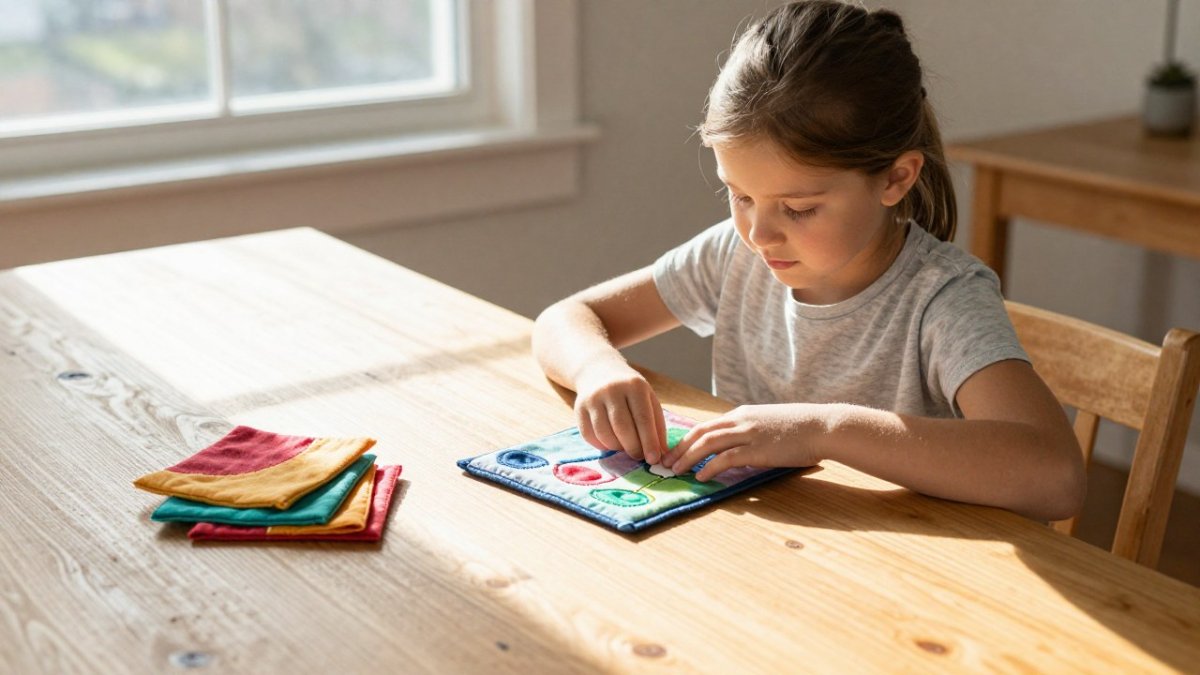
Picture a seven-year-old and an eighty-two-year-old at the same table. The child is working on colors and finger control. The grandparent is working on memory recall and hand dexterity. Same object, different goals, real conversation between them.
That is not a marketing line for us. It is the design brief. Our games use colors, shapes, and names as shared language, so a child and an adult can play at the same level without either one feeling talked down to.
Key Takeaway The best inclusive toy has no obvious "baby" version and no obvious "senior" version. It simply gives two people at different stages something real to do together.
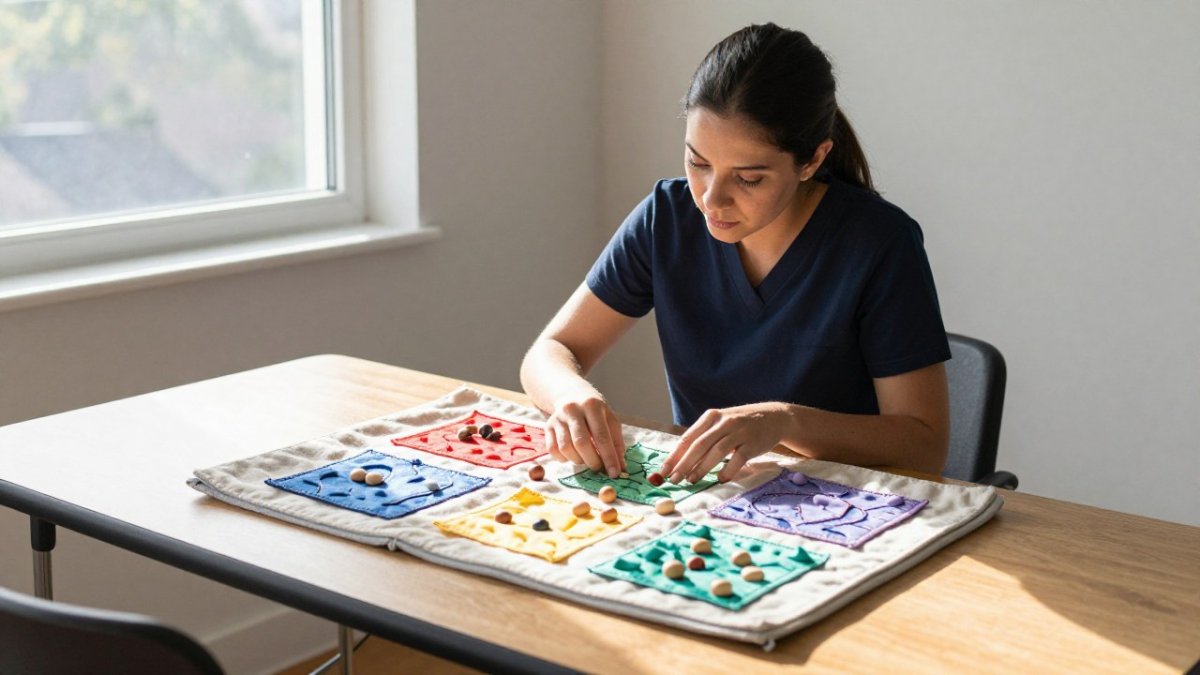
This is also where handcrafted sensory toys earn their place in a therapy bag or a classroom. One tool that works across ages means fewer items to buy, store, and explain.
Conclusion
Finding a toy that is safe, durable, and genuinely useful across ages is harder than it should be. Most of what fills store shelves is built for the shelf, not for your child's hands.
That is the problem we set out to solve at Witzkan. Every game is handcrafted in Saegertown, Pennsylvania from soft American flannel, backed by a Children's Product Certificate, and designed for inclusive play from ages three to 103. Our games build memory, coordination, and finger dexterity while giving kids and adults a calm, tactile experience they can share.
Explore our designs and find the one that fits your family.
Frequently Asked Questions
What are the benefits of handcrafted sensory toys compared to mass-produced ones?
Handcrafted sensory toys typically offer more attention to material quality, construction detail, and tactile variety than mass-produced alternatives. Because they are made in smaller batches, makers can use softer fabrics like American flannel and check each piece by hand. The benefits of sensory toys made this way include more varied textures for tactile exploration, sturdier seams that hold up to repeated use, and designs that support finger dexterity, memory, and coordination through purposeful play rather than flashy features.
Are handcrafted sensory toys safe for children?
Safety depends on the maker's certifications and materials. Look for toys that carry a Children's Product Certificate, which confirms the product has been tested against US child safety requirements. Handcrafted toys sewn from soft fabrics with securely attached components reduce risks like loose parts or harsh edges. Ask the maker what certification they hold and which materials they use. Witzkan, for example, is US child safety certified and sewn from soft American flannel, which gives parents a verifiable starting point.
Can sensory toys help with hand strength and coordination?
Yes. Sensory toys for hand strength and coordination work by giving fingers repeated practice with grasping, pinching, buttoning, zipping, and manipulating different textures. These actions build the small muscles in the hands and improve eye-hand coordination. Occupational therapists often use tactile tools for this reason. A handcrafted toy with varied fasteners and fabric weights lets a child practice these movements naturally through play, which tends to keep them engaged longer than repetitive exercises.
Are sensory toys suitable for adults and seniors too?
They can be. Tactile activities support memory recall and finger dexterity at any age, which is why some caregivers use sensory toys for autism support and why seniors benefit from hands-on engagement. An inclusive design that works for a 7-year-old and an 82-year-old means one toy can serve a whole household. The key is choosing something with varied textures and fasteners that stays interesting without feeling childish, so both generations actually want to pick it up.
Explore Our Designs

Comments